
• Skip to primary navigation
  • Skip to main content
  • HOME
  • Research
  • PEOPLE
  • PUBLICATIONS
  • OPPORTUNITIES
  • News
  • WORKSHOPS

Control and Robotics (CtrlRobot) Lab

Texas A&M University College of Engineering

Uncategorized

Posted on August 13, 2025 by Davood Soleymanzadeh


CASE2025 Workshop

Future of Work in the Age of Robotics and AI

First Image

Time: 08:00 – 12:00 PST, Thursday, August 21st, 2025

Location: Millennium Biltmore Hotel Los Angeles, 506 South Grand Avenue, Los Angeles

Conference Room: Bernard’s

Part 1: 08:00 – 09:30 AM

Part 2: 10:30 – 12:00 AM

Conference Brunch (Break): 09:30 – 10:30 AM

ABSTRACT:

While robotics and AI are rapidly changing the landscape of jobs and work, there are numerous obstacles to overcome to establish new industries and job roles, all while striving to improve productivity and the overall quality of work life. This workshop is designed to bring together individuals involved in robotics across various sectors. Its goal is to facilitate discussions on cutting-edge robotics research, including topics like human-robot collaboration, motion planning and control, and artificial intelligence. By examining these advancements, we seek to understand how robotics and AI will impact future work across industries such as manufacturing, construction, transportation, warehousing, and more. Through collaborative exploration and discussion, the workshop aims to shed light on the potential implications of these technologies for the workforce of tomorrow.

TENTATIVE PROGRAM:

08:00 – 08:15

Opening and Introduction: The Future of Work in the Age of Robotics and AI.

08:15 – 08:40

Wearable Sensing and Assistive Exoskeletons for Enhancing Worker Mobility and Safety in Construction.

Jingang Yi

08:40 – 09:05

Multi-Modal Sensing and Neural-Symbolic Manipulation.

Yu She

09:05 – 09:30

Robotics, AI, & Healthcare: Why we need Autonomous Robots and what the Future May Look Like.

Michael Yip

09:30 – 10:30

Conference Break (Brunch).

10:30 – 10:50

Fractional-Order Dynamics Meets Neural Networks in Large Scale Robotic Systems.

Tan Chen

10:50 – 11:10

Learning and Control for Human-Centered Autonomy.

Chen Tang

11:10 – 11:30

Bringing Collaborative Robot Teams to High-Mix Manufacturing: Optimal yet Adaptable Decision-Making in Semi-Structured Environments.

Neel Dhanaraj

11:30 – 11:50

Robotics and Human-Robot Collaboration for Disassembly and Remanufacturing.

Minghui Zheng

11:50 – 12:00

Closing and postworkshop discussion.

SPEAKERS:

Jingang Yi

Jingang Yi, Professor

Rutgers University

Title: Wearable Sensing and Assistive Exoskeletons for Enhancing Worker Mobility and Safety in Construction

Bio: Professor Jingang Yi received the B.S. degree in electrical engineering from Zhejiang University in 1993, the M.Eng. degree in precision instruments from Tsinghua University in 1996, and the M.A. degree in mathematics and the Ph.D. degree in mechanical engineering from the University of California, Berkeley, in 2001 and 2002, respectively. He is currently a Full Professor in mechanical engineering and Peter D. Cherasia Faculty Scholar at Rutgers University. His research interests include physical human-robot interactions, autonomous robotic and vehicle systems, mechatronics, dynamic systems and control, automation science and engineering. Prof. Yi is a Fellow of ASME and a Senior Member of IEEE. He has received several awards, including the 2018 Japan Society for the Promotion of Science (JSPS) Invitational Fellowship for Research, 2017 Rutgers Chancellor’s Scholars, 2014 ASCE Charles Pankow Award for Innovation, the 2013 Rutgers Board of Trustees Research Fellowship for Scholarly Excellence, and the 2010 NSF CAREER Award. He has coauthored several best papers in IEEE Transactions on Automation Science and Engineering and at IEEE/ASME AIM, ASME DSCC, and IEEE ICRA, etc. He currently serves as a Senior Editor for IEEE Transactions on Automation Science and Engineering and Editor-in-Chief of Conference Editorial Board for IEEE International Conference on Automation Science and Engineering (CASE). He also served as Associate Editor of IFAC journals Control Engineering Practice, Mechatronics, IEEE/ASME Transactions on Mechatronics, IEEE Transactions on Automation Science and Engineering, IEEE Robotics and Automation Letters, and ASME Journal of Dynamic Systems, Measurement and Control and a Senior Editor of IEEE Robotics and Automation Letters.

Taskin Padir

Yu She, Assistant Professor

Purdue University

Title: Multi-Modal Sensing and Neural-Symbolic Manipulation

Bio: Dr. Yu She is an assistant professor at Purdue University Edwardson School of Industrial Engineering. Prior to that, he was a postdoctoral researcher in the Computer Science and Artificial Intelligence Laboratory (CSAIL) at MIT from 2018 to 2021. He earned his PhD degree in the Department of Mechanical Engineering at the Ohio State University in 2018. His research is at the intersection of mechanism design, tactile sensing, intelligent control, and robot learning. He is a recipient of the ASME Feudenstein Young Investigator Award (2025), Showalter Early Investigator Award (2024) and the Google Research Scholar Award (2022) and multiple paper recognitions, including the Best Paper Award Finalist for the 2020 ASME Journal of Mechanisms and Robotics, the Best Paper Award Finalist at the 2020 Robotics: Science and Systems (RSS) Conference, the Best Paper Award at the 2018, ASME Dynamic Systems & Control Conference (DSCC), and the Best Paper Award Finalist at the 2013 IEEE International Conference on Robotics and Biomimetics (ROBIO).

Jonathon E. Slightam

Michael Yip, Associate professor

UC San Diego

Title: Robotics, AI, & Healthcare: Why we need Autonomous Robots and what the Future May Look Like

Bio: Michael Yip is an Associate Professor of Electrical and Computer Engineering at UC San Diego, and Director of the Advanced Robotics and Controls Laboratory (ARCLab). His group currently focuses on surgical robots, biomimetic design, and robot learning. His research has received several best paper awards and nominations at ICRA and IROS and RA-L, and he has been recognized by the NSF CAREER award, NIH Trailblazer award, and as a RAS Distinguished Lecturer. Several of his research has led to founded startups, and he was named the Faculty Innovator of the Year at UCSD in 2024, and elected into the National Academy of Inventors. Dr. Yip was previously a Disney Research in 2014 and Amazon Robotics in 2018. He received a B.Sc. in Mechatronics Engineering from the University of Waterloo, an M.S. in Electrical Engineering from the University of British Columbia, and a Ph.D. in Bioengineering from Stanford University.
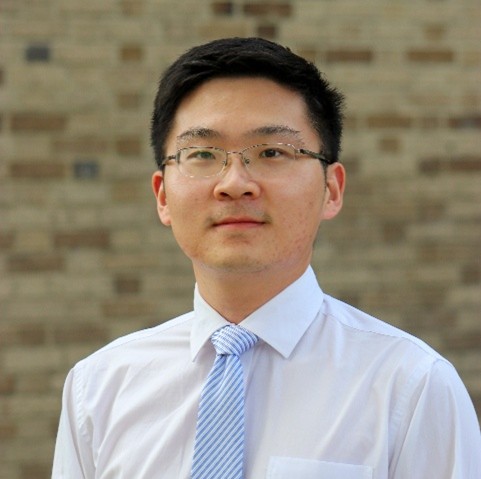
Ellen

Tan Chen, Assistant Professor

Michigan Tech

Title: Fractional-Order Dynamics Meets Neural Networks in Large Scale Robotic Systems.

Bio: Dr. Tan Chen is an Assistant Professor in the Department of Electrical and Computer Engineering at Michigan Tech. Prior to joining Tech, Dr. Chen was a Postdoctoral Research Associate affiliated with the Coordinated Science Laboratory at the University of Illinois Urbana-Champaign. He received his PhD degree in Aerospace and Mechanical Engineering from the University of Notre Dame. Prior to that, he received his BS degree in Mechanical Engineering from Shanghai Jiao Tong University (SJTU), China, and a joint MS degree from SJTU and École des Mines de Douai, France. He was an Eiffel Scholarship recipient in France and received the outstanding graduate student teaching award at the University of Notre Dame. He was selected as a DAAD AInet fellow for the Postdoc-NeT-AI in AI and robotics. His research interests include robotics, control theory, dynamical systems, and Artificial Intelligence (AI) with health care and smart manufacturing applications.

Hao Su

Chen Tang, Incoming Assistant Professor

University of California, Los Angeles

Title: Learning and Control for Human-Centered Autonomy.

Bio: Chen Tang is an incoming assistant professor at the Department of Civil and Environmental Engineering at the University of California, Los Angeles. He was a postdoctoral fellow in Computer Science at the University of Texas at Austin (UT Austin) and a postdoctoral scholar in Mechanical Engineering at the University of California, Berkeley (UC Berkeley). He received his Ph.D. degree in Mechanical Engineering from UC Berkeley in 2022, advised by Prof. Masayoshi Tomizuka, and his B.Eng. degree in Mechanical Engineering from the Hong Kong University of Science and Technology (HKUST) in 2016. He is a recipient of the IEEE ITSC Runner-up Best Student Paper Award (2018), the ASME DSCD Rising Star Award (2022), and was named an RSS Pioneer in 2023. His research interest lies at the intersection of control, robotics, and learning, with applications in autonomous driving and robot navigation.

Hao Su

Neel Dhanaraj, Incoming Lead Robotics Engineer

GrayMatter Robotics

Title: Bringing Collaborative Robot Teams to High-Mix Manufacturing: Optimal yet Adaptable Decision-Making in Semi-Structured Environments.

Bio: Neel Dhanaraj is an incoming Lead Robotics Engineer at GrayMatter Robotics, where he will develop intelligent robotic systems for high-mix manufacturing environments. His research interests focus on integrating classical, advanced robotics and planning methods with new deep learning–based approaches to create interpretable neuro-symbolic AI systems that operate robustly in semi-structured settings, balancing optimal decision-making with adaptability to environmental variation. Neel earned his Ph.D. in Mechanical Engineering from the University of Southern California’s Center for Advanced Manufacturing, where he developed iterative decision-making algorithms that generate high-quality plans accounting for variability in task uncertainty, execution failures, human preferences, and geometric configurations, as well as robotic systems evaluated on tasks such as assembly, spray coating, and surface heating. He previously received his B.S. and M.S. in Mechanical Engineering from Worcester Polytechnic Institute.

Hao Su

Minghui Zheng, Associate Professor

Texas A&M University

Title: Robotics and Human-Robot Collaboration for Disassembly and Remanufacturing.

Bio: Minghui Zheng received the B.S. degree in engineering mechanics in 2008 and M.S. degree in control science and engineering in 2011, both from Beihang University, China, and the Ph.D. degree in mechanical engineering from University of California, Berkeley, CA, USA, in 2017. She is currently an Associate Professor of the J. Mike Walker '66 Department of Mechanical Engineering, Texas A&M University, TX, USA. Before that, she was an Associate Professor at the University at Buffalo, NY, USA. Her research interest lies in learning, planning, and control with applications to several areas that are of vital importance to remanufacturing and robotics. Dr. Zheng was the recipient of the NSF CAREER Award in 2021.

ORGANIZERS:

Minghui Zheng

Minghui Zheng
Associate Professor
Texas A&M University

Hao Su

Hao Su
Associate Professor
New York University

Tan Chen

Tan Chen
Assistant Professor
Michigan Tech

Jingang Yi

Jingang Yi
Professor
Rutgers University


https://zh.engr.tamu.edu/2025/08/13/case2025-workshop-future-of-work-in-the-age-of-robotics-and-ai/

Filed Under: Uncategorized

AIM2024 Workshop: Future of Work in the Age of Robotics and AI

Posted on May 14, 2024 by Davood Soleymanzadeh


AIM2024 Workshop

Future of Work in the Age of Robotics and AI

  • 1-Participants
  • 2-Participants
  • 3-PosterSession
  • 4-PosterSession
  • 5-Postworkshop-discussion
  • 6-Bestposterwinners
First Image
Second Image

Time: 09:00 – 12:30 EST, Monday, July 15th, 2024

Location: FAIRFAX, 3rd Floor, Sheraton Boston Hotel, 39 Dalton Street, Boston

Poster Submission: Submission Form

Workshop Flyer: Flyer

Workshop Booklet: Booklet

ABSTRACT:

While robotics and AI are rapidly changing the landscape of jobs and work, there are numerous obstacles to overcome to establish new industries and job roles, all while striving to improve productivity and the overall quality of work life. This workshop is designed to bring together individuals involved in robotics across various sectors. Its goal is to facilitate discussions on cutting-edge robotics research, including topics like human-robot collaboration, motion planning and control, and artificial intelligence. By examining these advancements, we seek to understand how robotics and AI will impact future work across industries such as manufacturing, construction, transportation, warehousing, and more. Through collaborative exploration and discussion, the workshop aims to shed light on the potential implications of these technologies for the workforce of tomorrow.

TENTATIVE PROGRAM:

09:00 – 09:10

Opening and Remarks

09:10 – 09:25

Why Automation Fails: Barriers to Robot Adoption in Manufacturing.

Ben Armstrong

09:25 – 09:40

Wearable Safety Sensing and Knee Assistive Exoskeletons for Construction Workers.

Jingang Yi

09:40 – 09:55

Experiential Robotics for Accelerating the Future of Work.

Taskin Padir

09:55 – 10:10

Data-driven and Physics Informed AI approaches for Manipulation.

Jonathon E. Slightam

10:10 – 10:20

Additive Manufacturing for Electromagnetic Actuators and Mechatronic Systems.

Ellen Mazumdar

10:20 – 10:30

AI-Powered Soft Wearable Robots for Augmenting and Restoring Human Performance.

Hao Su

10:30 – 11:00

Coffee Break.

11:00 – 11:40

Poster and Voting.

11:40 – 11:55

Muscle-like Soft Actuators for Human-robot Interaction.

Yufeng (Kevin) Chen

11:55 – 12:10

AI or Human Brain: Who will lead the future of Intelligence?

Kamal Youcef-Toumi

12:10 – 12:25

Robots in the Workplace: The NSF After Sunset.

Jordan M. Berg

12:25 – 12:30

Closing and Poster Awards Announcement.

SPEAKERS:

Ben Armstrong

Ben Armstrong, Executive Director and Research Scientist

MIT’s Industrial Performance Center

Title: Why Automation Fails: Barriers to Robot Adoption in Manufacturing.

Bio: Ben Armstrong is the executive director of MIT’s Industrial Performance Center, where he co-leads the Work of the Future initiative. His research examines how workers, firms, and regions adapt to technological change. His current projects include a working group on generative AI, as well as a book on American manufacturing competitiveness. His work has been published or featured in academic and popular outlets including the New York Times, Harvard Business Review, Forbes, Sloan Management Review, Times Higher Education, the Boston Review, Daedalus, and Economic Development Quarterly. He received his PhD from MIT and formerly worked at Google Inc.

Jingang Yi

Jingang Yi, Professor

Rutgers University

Title: Wearable Safety Sensing and Knee Assistive Exoskeletons for Construction Workers

Bio: Professor Jingang Yi received the B.S. degree in electrical engineering from Zhejiang University in 1993, the M.Eng. degree in precision instruments from Tsinghua University in 1996, and the M.A. degree in mathematics and the Ph.D. degree in mechanical engineering from the University of California, Berkeley, in 2001 and 2002, respectively. He is currently a Full Professor in mechanical engineering and Peter D. Cherasia Faculty Scholar at Rutgers University. His research interests include physical human-robot interactions, autonomous robotic and vehicle systems, mechatronics, dynamic systems and control, automation science and engineering. Prof. Yi is a Fellow of ASME and a Senior Member of IEEE. He has received several awards, including the 2018 Japan Society for the Promotion of Science (JSPS) Invitational Fellowship for Research, 2017 Rutgers Chancellor’s Scholars, 2014 ASCE Charles Pankow Award for Innovation, the 2013 Rutgers Board of Trustees Research Fellowship for Scholarly Excellence, and the 2010 NSF CAREER Award. He has coauthored several best papers in IEEE Transactions on Automation Science and Engineering and at IEEE/ASME AIM, ASME DSCC, and IEEE ICRA, etc. He currently serves as a Senior Editor for IEEE Transactions on Automation Science and Engineering and Editor-in-Chief of Conference Editorial Board for IEEE International Conference on Automation Science and Engineering (CASE). He also served as Associate Editor of IFAC journals Control Engineering Practice, Mechatronics, IEEE/ASME Transactions on Mechatronics, IEEE Transactions on Automation Science and Engineering, IEEE Robotics and Automation Letters, and ASME Journal of Dynamic Systems, Measurement and Control and a Senior Editor of IEEE Robotics and Automation Letters.

Taskin Padir

Taskin Padir, Professor

Northeastern University

Title: Experiential Robotics for Accelerating the Future of Work

Bio: Taskin Padir holds concurrent positions as a Professor in the Electrical and Computer Engineering Department at Northeastern University, and an Amazon Scholar. He received his PhD and MS degrees from Purdue University. He is the Founding Director of the Institute for Experiential Robotics at Northeastern University. His research focuses on shared autonomy, human-in-the-loop robotics, embodied AI, and human-robot teaming at the extremes.

Jonathon E. Slightam

Jonathon E. Slightam, Senior Technical Staff

Sandia National Laboratories

Title: Data-driven and Physics Informed AI approaches for Manipulation

Bio: Jonathon E. Slightam is a roboticist at Sandia National Laboratories and leverages physics informed AI for next generation robot manipulation applications. His work at Sandia is aimed to create novel solutions for manipulation problems having rich contact dynamics, which can enable real-world applications such as disaster response and waste cleanup.

Ellen

Ellen Mazumdar, Assistant Professor

Georgia Institute of Technology

Title: Additive Manufacturing for Electromagnetic Actuators and Mechatronic Systems.

Bio: Dr. Ellen Mazumdar is an Assistant Professor at Georgia Tech in the School of Mechanical Engineering with a courtesy appointment in the School of Aerospace Engineering. She graduated with her B.S., M.S., and Ph.D. from MIT and was a postdoc at Sandia National Labs in Albuquerque, New Mexico. She currently leads the Sensing Technologies Laboratory, which focuses on developing new sensor and actuator topologies, mechatronic systems, and diagnostic techniques. She is a recipient of the ORAU Ralph E. Powe Junior Faculty Enhancement Award and the AFOSR Young Investigator Award. Her group has received multiple best paper awards, including a best paper award at the 2023 IEEE/ASME Advanced Intelligent Mechatronics (AIM) conference.

Hao Su

Hao Su, Associate Professor

North Carolina State University

Title: AI-Powered Soft Wearable Robots for Augmenting and Restoring Human Performance.

Bio: Dr. Hao Su, PhD, is an Associate Professor in the Department of Mechanical and Aerospace Engineering at North Carolina State University. He is also a faculty at the Joint UNC/NCSU Department of Biomedical Engineering. He is the Director of Biomechatronics and Intelligent Robotics Lab, which brings together researchers from engineering, computer science, apparel, biomechanics, and physical therapy to develop and translate new disruptive robotic technologies for rehabilitation and surgery. He is a Switzer Research Distinguished Fellow of the Department of Health and Human Services. He was a postdoctoral research fellow at Harvard University and Wyss Institute for Biologically Inspired Engineering. Before this role, he was a Research Scientist at Philips Research North America, designing robots for lung and cardiac surgery. Dr. Su received the NSF CAREER Award, Best Paper in Mechatronics, the Best Medical Robotics Paper (Runner-up) Award at the IEEE International Conference on Robotics and Automation, and the Philips Innovation Transfer Award. He is a principal investigator of grants sponsored by NSF, two NIH R01, National Institute on Disability, Independent Living, and Rehabilitation Research (NIDLRR), and Toyota Mobility Foundation.

Yufeng (Kevin) Chen

Yufeng (Kevin) Chen, Associate Professor

MIT

Title: Muscle-like Soft Actuators for Human-robot Interaction

Bio: Kevin Chen is an associate professor at the Department of Electrical Engineering and Computer Science, MIT. He earned his Ph.D. from Harvard University and undergraduate degree from Cornell University. His research interests include developing high power soft actuators and building biomimetic robots that embody animal-like agility and robustness. Dr. Chen is a recipient of the NSF CAREER award, the Steven Vogel Young Investigator Award, and the Ruth and Joel Spira Teaching Excellence Award. He also received multiple best paper awards within the robotics community (TRO 2021, RAL 2020, IROS 2015).

Youcef-Toumi

Kamal Youcef-Toumi, Professor

MIT

Title: AI or Human Brain: Who will lead the future of Intelligence?

Bio: Kamal Youcef-Toumi is a Professor of Mechanical Engineering at the Massachusetts Institute of Technology (MIT). He is Co-Director of the Center for Complex Systems at King Abdulaziz City for Science and Technology (KACST) Saudi Arabia and MIT, Director of the Ibn Khaldun Fellowship Program for Saudi Arabian Women, and Director of the MIT Mechatronics Research Laboratory. He earned his M.S. and Sc.D. degrees from MIT. Youcef-Toumi’s research has focused primarily on modeling, design, control theory, and learning techniques with fast adaptation, and systems intelligence. The applications include robotics, automation, intelligent systems with artificial intelligence, metrology, and nanoscale video imaging. He made significant contributions to MIT’s international research and education collaborations, including Qatar, Russia, Saudi Arabia, Singapore, and the United Arab Emirates. He served on many professional committees and as a consultant for several multinationals. He is an IEEE Senior and Life member, an ASME Fellow, and a Fellow of the International Association of Advanced Materials. He served as Editor of several symposia/conference proceedings.

Jordan M. Berg

Jordan M. Berg, Program Officer

National Science Foundation

Title: Robots in the Workplace: The NSF After Sunset

Bio: Jordan M. Berg is a Program Officer at the US National Science Foundation since 2014. NSF programs he has been associated with include Foundational Research in Robotics (FRR); Dynamics, Control, and System Diagnostics (DCSD); Mind, Machine, and Motor Nexus (M3X); Future Manufacturing (FM); the Future of Work at the Human-Technology Frontier (FW-HTF); EFRI C3 Soft Robotics (C3SoRo); EFRI Brain-Inspired Dynamics for Engineering Energy-Efficient Circuits and Artificial Intelligence (BRAID); EFRI Biocomputing through EnGINeering Organoid Intelligence (BEGIN OI); the National Robotics Initiative (NRI); Cyber Physical Systems (CPS); and the National AI Research Institutes (NAIRI). Prior to joining NSF, Dr Berg was professor of Mechanical Engineering at Texas Tech University for 25 years. Dr Berg received the BSE and MSE in Mechanical and Aerospace Engineering from Princeton University, and the MS in Mathematics and PhD in Mechanical Engineering and Mechanics from Drexel University. He has held visiting appointments at the US Air Force Research Labs, the Institute for Mathematics and Its Applications at the University of Minnesota, and the Universities of Ruhuna and Peradeniya in Sri Lanka. His research interests include nonlinear control, modeling and control of micro- and nanosystems and material systems, mechatronics, robotics, human-technology interactions, and social and economic consequences of technological innovation.

POSTER LIST:

Poster Number
Poster Title and Presenter

1
A Voxel-Enabled Robotic Assistant for Omnidirectional Conveyance (Katiso Mabulu)

2
Integrating CNNs and Depth Cameras for Robust Terrain Classification in Quadrupedal Robots (Jack Anders Smittenberg)

3
Experiment-Free Exoskeleton Assistance via Reinforcement Learning in Simulation Saves Energetics During Human Locomotion(Menghan Jiang)

4
Rapid Prototyping and Manufacturing of Fully 3D-printed Electromagnetic Robotic Actuators (Sebastian Mettes)

5
Rapid Constrained Object Motion Estimation Using Deep Neural Networks (Raymond Kim)

6
A High Torque Density and Highly Compliant 7-DOF Collaborative Robotic Arm (William Zhou)

7
TransFusion: A Practical and Effective Transformer-based Diffusion Model for 3D Human Motion Prediction (Sibo Tian)

8
Integrating Uncertainty-Aware Human Motion Prediction into Graph-Based Manipulator Motion Planning (Sibo Tian)

ORGANIZERS:

Minghui Zheng

Minghui Zheng
Associate Professor
Texas A&M University

Hao Su

Hao Su
Associate Professor
North Carolina State University

Tan Chen

Tan Chen
Assistant Professor
Michigan Technological University

Ellen Mazumdar

Ellen Mazumdar
Assistant Professor
Georgia Institute of Technology

Jingang Yi

Jingang Yi
Professor
Rutgers University


Filed Under: Uncategorized

Q&A: Dr. Minghui Zheng on Mechanical Engineering, Research, and Advancing Robotics

Posted on February 19, 2024 by Taylor Northcut

News Image

In an interview posted by the College of Engineering, Dr. Zheng discusses her academic background and research. In this interview, Dr. Zheng shares insights on her journey into mechanical engineering, discusses her motivations for joining the department, and explains the aims of her research.

Read the full interview.

Filed Under: Uncategorized

Dr. Minghui Zheng joins Texas A&M University!

Posted on January 23, 2024 by Taylor Northcut

News Image
Welcome to the J. Mike Walker ’66 Department of Mechanical Engineering Dr. Zheng!

Dr. Zheng is joining the J. Mike Walker ’66 Department of Mechanical Engineering at Texas A&M University this Spring.

Dr. Minghui Zheng’s primary area is control and robotics. One of her research directions is task sequence and robotic motion planning in a human-robot collaborative environment. She is particularly interested in such developments to improve the efficiency and effectiveness of the disassembly, recycling, and remanufacturing of end-of-use products such as e-wastes. Another research direction is learning-based control to enable learning among heterogeneous drones toward their mass customization and application. Her research interests also include collaborative estimation using connected vehicles, optimization and control for power and energy storage systems, as well as iterative learning control for high-precision systems.

Dr. Zheng received her Bachelor’s Degree in Engineering Mechanics from Beihang University in 2008. After, she pursued a Master’s degree in Control Science and Engineering in 2011. She went on to earn her Ph.D. in Mechanical Engineering from the University of California, Berkley in 2017. Upon graduation, she began her career at the University of Buffalo within the Department of Mechanical and Aerospace Engineering department. In 2021, she received two distinguished awards: the NSF CAREER Award and the SEAS Early Career Researcher of the Year from UB. Dr. Zheng’s research has been supported by part of an approximate $6.5M total funding of which she is the PI or university PI. So far her share of the research funding is more than $2M. She has been working on six NSF grants as the PI.

Dr. Zheng has authored/co-authored 34 journal articles. She has published papers in major journals in her field, such as IEEE Transactions on Systems, Man, and Cybernetics: Systems, IEEE/ASME Transactions on Mechatronics, IEEE Transactions on Robotics, IEEE Transactions on Automatic Control, IEEE Robotics and Automation Letters, and Robotics and Computer-Integrated Manufacturing. These publications documented discoveries and insights in learning, planning, and control algorithms for collaborative robots, drones, high-precision data and energy storage systems, etc.. Dr. Zheng has authored/co-authored 36 peer-reviewed conference papers, of which two are selected among the best conference (student) paper finalists and one is selected as the best student paper on vibrations of the ASME Dynamic Systems and Control Division. Additionally, she owns two patents.

She has also taken part in many professional activities to further her leadership skills, such as being a reviewer for the NSF, organizing workshops, reviewing journals and conferences.

Her research interests include:

  • Robotics, control and mechatronics
  • Task sequence and robotic motion planning in a human-robot collaborative environment
  • Lerarning-based control to enable learning among heterogeneous robots toward their mass customization and application
  • Collaborative estimation using connected vehicles, optimization and control for power and energy storage systems
  • Iterative learning control for high-precision systems

Filed Under: Uncategorized

© 2016–2026 Control and Robotics (CtrlRobot) Lab Log in

Texas A&M Engineering Experiment Station Logo
  • College of Engineering
  • Facebook
  • Twitter
  • State of Texas
  • Open Records
  • Risk, Fraud & Misconduct Hotline
  • Statewide Search
  • Site Links & Policies
  • Accommodations
  • Environmental Health, Safety & Security
  • Employment